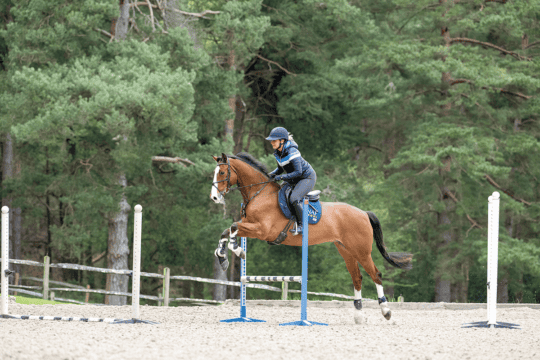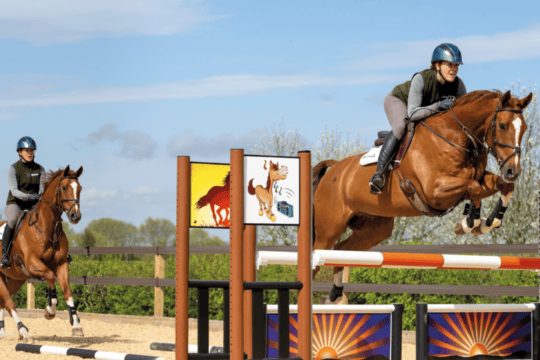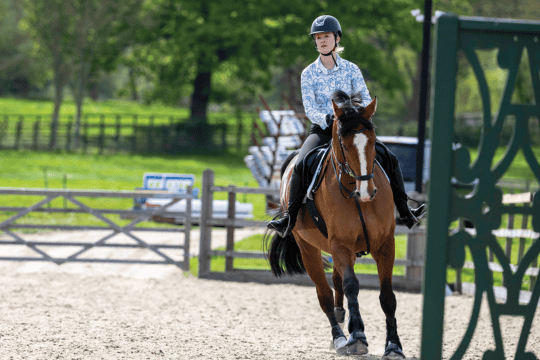


Ride bigger fences confidently and successfully with our top tips
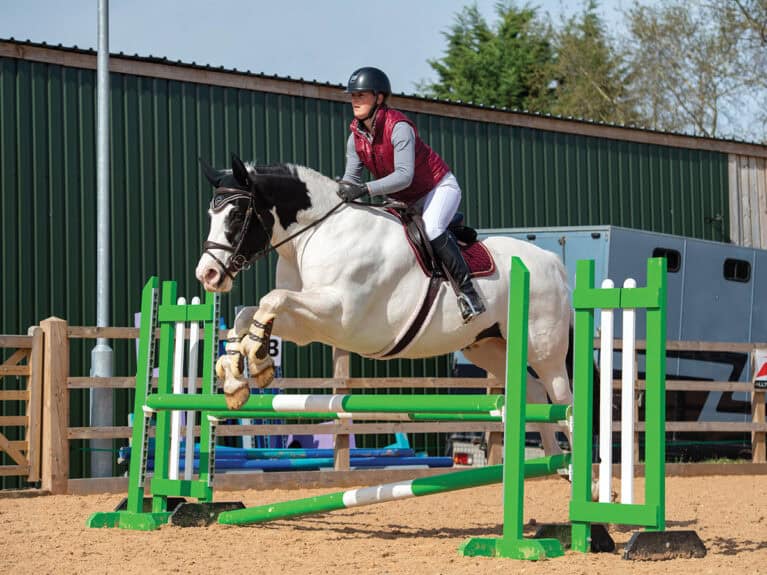
When it comes to jumping, it’s all too easy to stay within your comfort zone and tackle the same height year after year.
Whether you enjoy competing or popping fences at home, moving up a hole or two on the wings doesn’t need to be as big a deal as you might think. We’re here to help you take your jumping skills to a whole new level.
Secret one – Use gridwork
Grids are a great way to set you and your horse up for success because they help you both achieve and keep the correct striding. Build a progressive grid, with the first fence small and the largest fence at the end, then focus on a good approach in an active, balanced canter – maintain the quality of the canter and let the grid do the rest of the work for you.
If you’re not sure how to build one, why not book some lessons with a jumping coach? Or check out our guide to simple gridwork – bit.ly/3_GRIDS
Secret two – Get a good canter
Successful jumping comes from the quality of your horse’s canter, so work on this on the flat. Focus on ensuring your horse is travelling forward from your leg into a soft, even rein contact.
A good canter sees your horse working actively forward from the hindquarters in an uphill frame and good balance. To help you achieve this, here are a few exercises you can try…
- On a circle, ride lots of on-and-back in canter – think of asking your horse to sit (collected canter) then push (medium canter). Try to keep the rhythm the same – it’s just the stride length that should change
- Use canter poles to help to keep the activity in your horse’s canter. You can even raise them on small blocks to increase the effort your horse makes
- Make use of hills out hacking. Cantering up slopes is a great way to improve the strength in your horse’s hindquarters and it can be fun for you both, too.
TOP TIP
As well as riding transitions within the pace, make lots of gear changes between paces, too. This will really help your horse’s balance.
Did you know?
The more adjustability you have in your horse’s canter, the easier it will be to tackle bigger fences.
Secret three – Make fences inviting
The more inviting a fence is, the more confident you and your horse will feel. There are a few ways to do this…
Add a ground pole in front of uprights and oxers without a filler creates a ground line that helps your horse judge the jumping effort needed. When building a spread, make it ascending rather than square – the lower front rail is more inviting. You can also add a placing pole three metres in front of the fence to help your horse get in the perfect spot for take-off.
TOP TIP
Working alongside a confidence coach can be a great way to boost confidence and help you develop a more positive approach to your riding.
Secret four – Remember your horse doesn’t know
Jumping bigger heights is usually more of an issue for the rider than it is the horse. Don’t forget, if you’re moving up to 90cm from 80cm, the chances are your horse will still jump the same height.
By making height increases incremental, you and your horse barely notice them and actually, once you’re confidently popping over 10cm higher than before, you’ll probably wonder what all the fuss was about.
Did you know?
Riding grids and courses with poles on the ground rather than fences is a great way to develop your eye for seeing a stride.
TOP TIP
Use a neck strap when jumping. It’ll do wonders for your confidence and you’ll have something to hold onto if you get left behind or lose balance.
Secret five – Think about your riding
Your job is to get your horse to the fence in a good canter, then his job is to jump it. Keep to your side of the bargain by making time to check in on your riding to ensure you’re doing all you can to help…
- Approach the fence in good balance and rhythm and keep your eyes up
- Relax your weight into your heels so your lower leg stays forward
- Try to relax your shoulders and remember to keep breathing
- Imagine pushing your hips towards the back of the saddle as you take off, rather than folding forwards – this will help prevent you tipping forward and getting in front of the movement
- Keep your shoulders up and back as you land to aid your balance
Remember, it’s always best not to over think things. Often, when it comes to riding, less is more so try to relax and enjoy the ride.