


Your work on the flat forms the basis of your showjumping round. Perfect it with Claire Edwards’ guidance
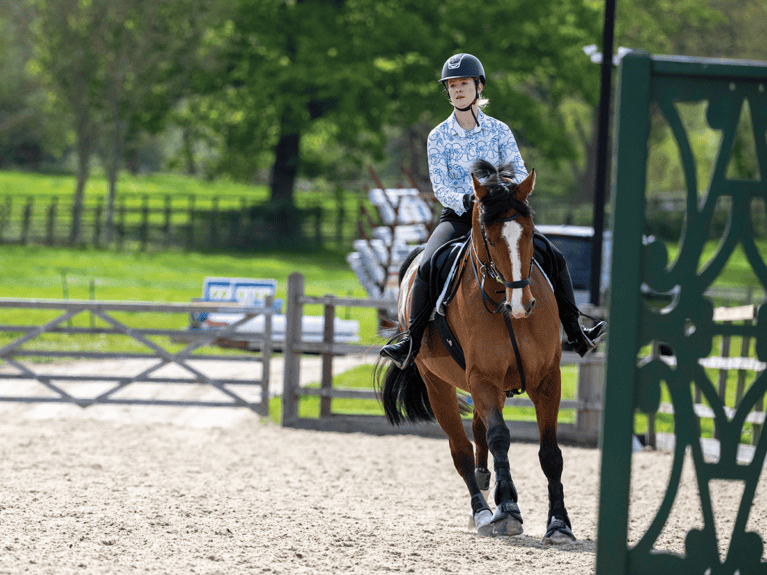
Our expert: Claire Edwards MSc is a British Showjumping and British Equestrian High Performance Level 4 coach, an NDPCE coach, a BEF Youth Pathway coach and a BHS Accredited Professional coach. She runs Wix Hill Livery Stables in Surrey.
When you think of jumping, you probably imagine the dramatic take-off followed by a perfect bascule. However, the reality is that these moments in the air are actually few and far between, with 80% of your showjumping spent on the flat. This means that you and your horse will never reach your full potential over fences if you don’t have the fundamentals of flatwork in place.
In this series, I’ll give you some of my most useful pointers on how to produce the best possible results from different types of horses. But whether your horse is red hot or needs a little more encouragement over the poles, it all starts the same way – on the flat.
Forging ahead
What’s the first ingredient you need for showjumping? Forward motion. Many riders underestimate how forward their horse should really be to achieve the ideal rhythm for tackling a course or grid. Often, riders hold onto their horses in fear of them becoming too quick, long or flat, sometimes without realising it’s happening. Usually, it’s because they feel they need a safety net.
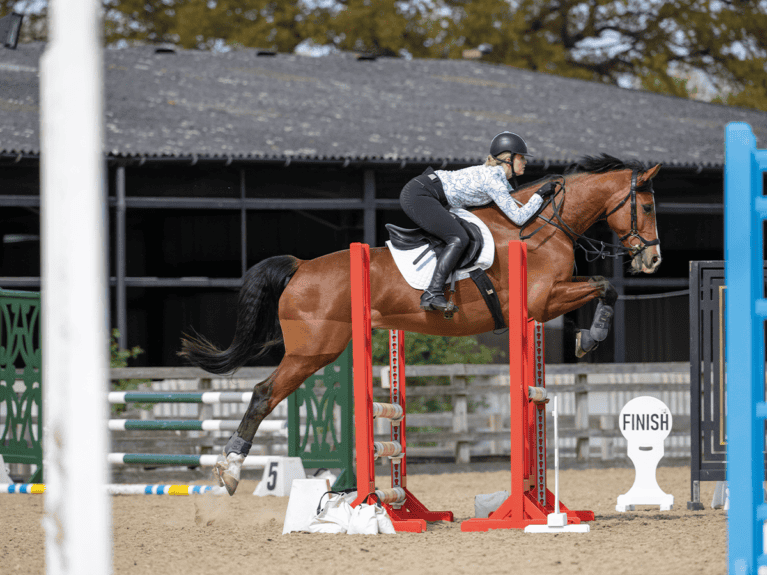
If your horse is maintaining an active, polite canter towards a fence, there can be a small part of your brain that catastrophises, imagining a whole range of failure scenarios, from a run out to a knocked pole. This can lead you to try to fix the ‘problem’, but the reality is that by the time you’re three strides away, it’s already too late for adjustments.
Correct your canter
In addition, giving space to negative thoughts is a form of non-commitment. If you think you won’t make it over the fence successfully, you’re already setting yourself up for a problem, which is why it’s so important to spend time gaining confidence in creating and maintaining the correct canter on the flat and over poles. You’ll then know what your ideal jumping canter should feel like and be comfortable with it.
Lazy bones
If your horse is on the lazier side, don’t confuse this with being unresponsive. Before you face any fences, start by considering your communication. How light an aid will he respond to? Working on transitions between gaits at set points around the arena and building up to transitions within the gait at the same places will help you find your horse’s gears and gain the fine-tuning you need when it comes to showjumping.
Top tip
Fast and forward are two different things. The latter is what you’re looking for in a jumping canter.
Souped up
If your horse is too fast and rushes to fences, a natural reaction is to use your reins to slow down, when actually it’s the opposite of what’s needed, as it should be used in conjunction with riding a horse forward into the hand first.
Horses who rush are generally stiff, unbalanced and nervous. Flatwork training will encourage relaxation, so he becomes more supple and learns to use himself properly. Working on circling and bending exercises, and over canter poles on a 20m circle, are perfect to make sure he’s loosening laterally and carrying himself, instead of relying on you, and he’ll gain natural balance as a result.
Two-way trust
It takes bravery from both horse and rider to tackle fences with complete trust. That kind of relationship isn’t created overnight, and establishing it through groundwork and flatwork will help the communication between you when it comes to tougher questions. It’s imperative that you and your horse understand each other completely and, when fences are involved, he needs to respect your judgement, which comes from positive experiences together.
Building up fence height and exercise difficulty gradually, once your horse is ready to progress, is the key to maintaining confidence and establishing trust. A good exercise to try is approaching a single pole on the ground and getting your stride just right over it.
Top tip
If your horse is too close or stumbles over the pole, try going large in a stronger canter and let the pole come to you.
Spring loaded
Falling onto the forehand means he won’t have the upward spring required to make the correct shape nor the strength (or push) from the hindquarters. This is a sign of weakness through the body and a lack of self-carriage. The goal is for him to propel forward with power from behind by engaging the hindquarters and lifting through his back. He will therefore become more uphill in the shoulder and lighter on the forehand, allowing a more athletic scope. The way to achieve this is by riding circles and bending exercises to encourage him to step through with his hindleg and lift towards your hand. A three-loop serpentine, with a 10m circle added in, is a very useful exercise for this.
Top tip
If your horse starts to feel heavy, give a half-halt and squeeze with your legs to encourage him to engage his core and step through.
Keeping rhythm
If he braces and lifts his head, you’ll lose control and rhythm to end up too close or taking off too early. The fix? Refining your canter on the flat with leg to hand co-ordination so he’s naturally propelling forward from behind. The cause is often a lack of relaxation and engagement. Practise carrying your hands together, keeping them still without being fixed, working through direct transitions on a circle without changing your hand position and rein length. By maintaining the regular rhythm of the canter and teaching your horse to seek the contact himself, he’ll see a soft head carriage is a far nicer place to be but you may need to build this trust in walk and trot first.
Basic training
Whatever tendencies your horse has, if you’re noticing issues in your showjumping, your flatwork sessions are always the best place to work on things and a great starting point. After all, any weaknesses in your horse’s way of going will likely be exacerbated over fences. If you stay patient and in tune with your horse, then you won’t go far wrong.
Your Comments

Newsletter Sign-up


Subscribe
Latest Issue

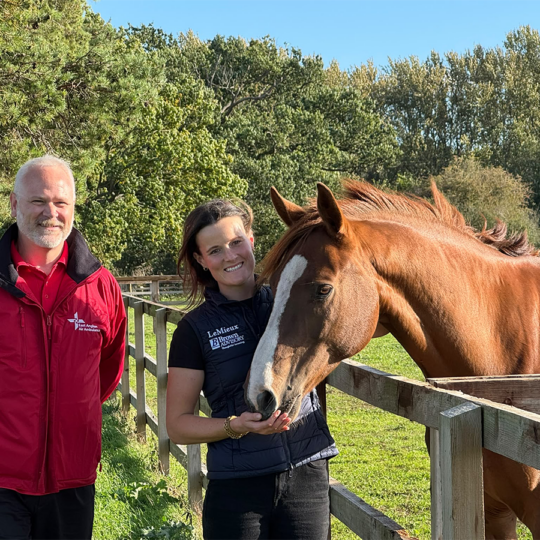
Bubby Upton backs air ambulance appeal after life-threatening riding accident
Added 15th October, 2026
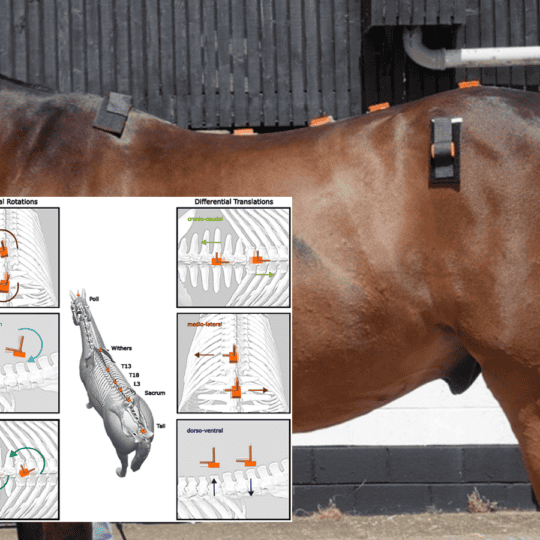
Load-pulling work linked to reduced spinal movement in military horses
Added 14th October, 2026




Step-by-step on how to hitch a trailer
Added 18th March, 2025

Winter Training: Part 2
Added 4th March, 2025