


Featured Professional

Pippa Funnell
Pippa Funnell is firmly established as one of the world's leading three day event riders.
Discover Pippa’s top tips for getting your horse into shape!
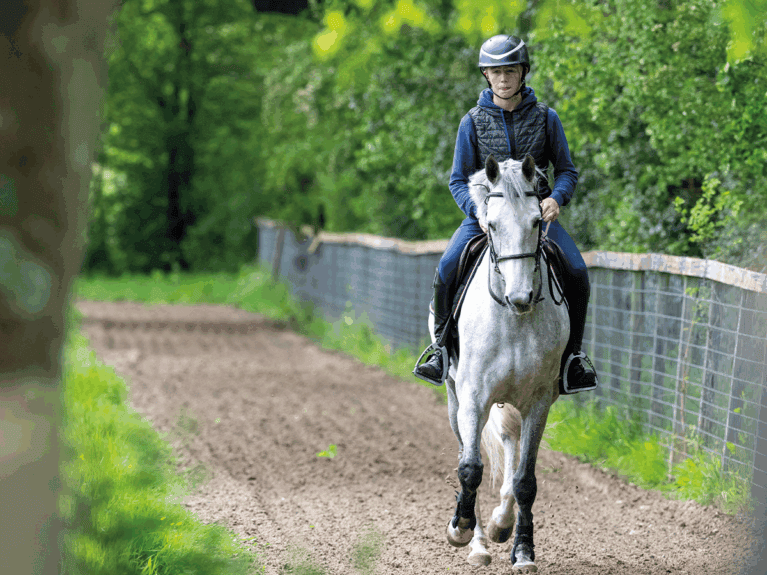
While targeted fitness sessions are important if you have specific competition goals, having a horse who’s fit enough for his job is essential in helping him perform at his best, preventing injury and increasing his longevity – even if you just want to go for a chatty hack around the local common with your horsey pals. Here are my ideas that will help you create a fit, happy and healthy horse, whatever you enjoy doing together.
Plenty of walking
If your horse has had time off, it’s important to spend a few weeks in walk before you up the pace and intensity. Walking is low-impact and will gently improve your horse’s fitness, so don’t overlook the value of a hilly walk hack – even if your horse hasn’t been out of work.
Taking your horse for a walk in-hand, long reining him in the arena and using a horse walker, if available, are also ways you can contribute to improving your horse’s fitness without the impact of a rider.
Top tip
It’s essential to increase your horse’s level of work slowly to help reduce the risk of injury.
Work in the school
As your horse’s fitness increases, you can start to incorporate more work in the school, such as poles and jumping. But to start with, focus on building up his core with lots of stretching. Avoid working him in a frame until his strength has developed.
Top tip
Don’t overdo your schooling sessions. If you achieve the aim of your session sooner than you had expected, why not go for a short hack to finish off his work out? He’ll enjoy the change of scenery and it will still be beneficial for his fitness.
Mix up your routine
Horses thrive off routine, but they also enjoy variation, so incorporate different types of exercise, such as hacking, schooling – on the flat and over poles – and a little gridwork, into his weekly schedule.
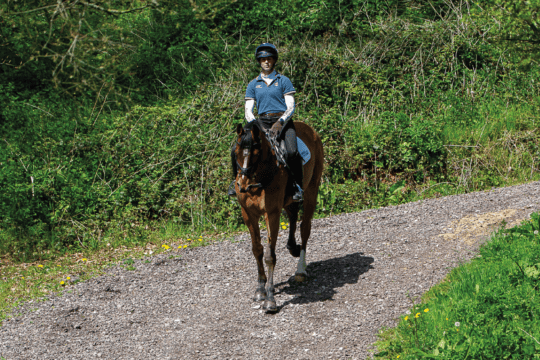
If you’re lucky enough to have lots of different hacking routes like me, try to avoid riding the same one every time – mix up hilly hacks with faster, flatter ones and vary your route, distance and time as much as possible. By doing this – and sticking to it – you’ll create a happier and more willing horse, as well as one who is physically able to do his job.
Top tip
Don’t forget to include one or two rest days in your horse’s schedule and turn him out in the field as much as possible.
Interval training
Alternating periods of high- and low-intensity through interval training is a brilliant way to slowly improve your horse’s fitness. Start off with shorter periods of the work phase (trot and canter) between recovery phases (walk) and as your horse gets fitter, you can increase the time spent in the faster paces.
Top tip
If you don’t have access to a canter track or large field, you can do interval training in the arena.
Rider fitness
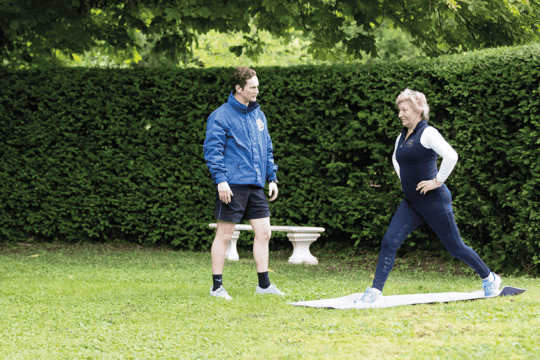
As a rider, you’ve got to be able to control and keep up with your horse, so working on your own fitness is a must. If you don’t like a certain type of exercise, such as running, think of other ways you can get your body moving and heart rate up. I prefer cross-training, but for you it could be an extra trip to the muck heap when poo picking or even a Pilates class at your local gym.
Increase the distance
If you want to do more high-intensity work with your horse – whether that’s competing or a sponsored ride – try to schedule in a big hack each week. Set aside some time in your diary and plan a route with plenty of hills as well as some long canters. In the lead up to Badminton, my horses will go on a 14km hack once a week, which includes some serious hills – the benefits of living in Surrey! And while you won’t need to work your horse that intensely, going for a more challenging hack from time to time is also really enjoyable.
Go to the gallops
There’s nothing better than having a blast to blow away the cobwebs, and hiring out a gallop track means you can work your horse safely on good footing. How many times you ride up the gallops depends on how long they are, but gradually build up the intensity and ensure your horse is thoroughly warmed up first. Then, as an example, you can…
- Sessions 1–2: have two slow canters
- Sessions 3–4: have one slow canter and one faster canter
- Sessions 5–6: have two faster canters
Your Comments


Newsletter Sign-up

Subscribe

Latest Issue

New accredited bit and bridle fitting qualifications include specialist bitless course
Added 9th November, 2026

CANTER launches podcast series to support sustainable horse worming practices
Added 9th November, 2026


Step-by-step on how to hitch a trailer
Added 18th March, 2025
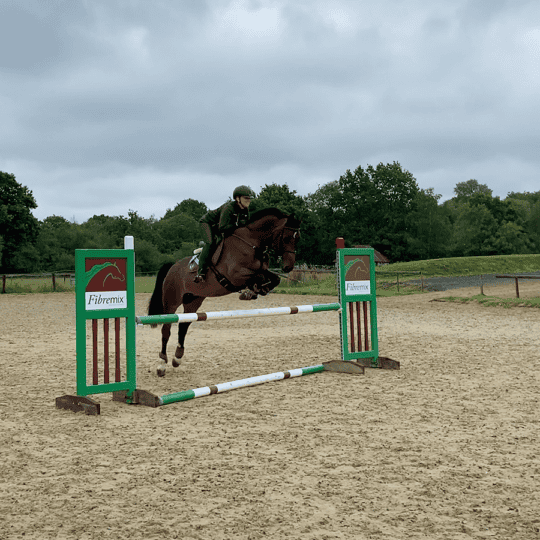
Winter Training: Part 2
Added 4th March, 2025