

Remedial equine therapist Gillian Higgins explains how to make massage a part of your daily horse care routine
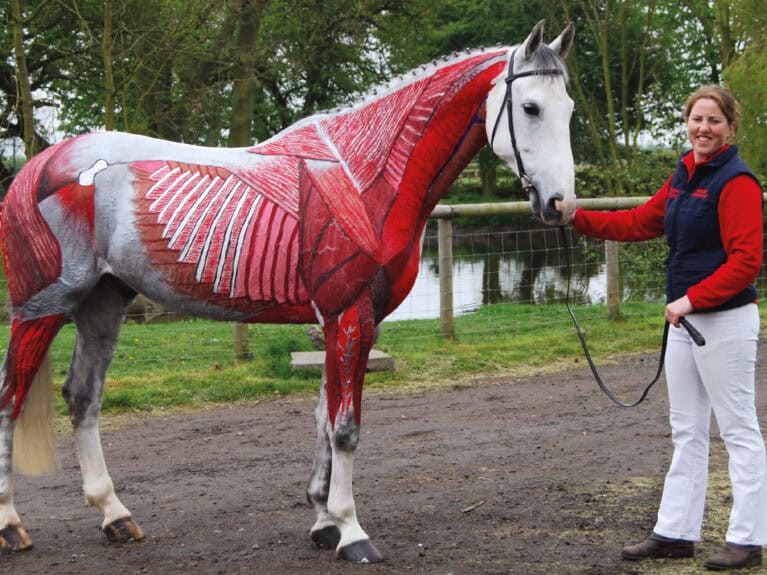
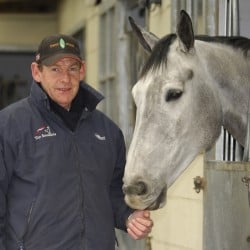
Gillian Higgins is a BHS senior coach, and professional sports and remedial therapist, specialising in assessing equine posture and movement. She’s known for her use of anatomical painting on live horses when teaching.
You know how tired, achy muscles can make you feel miserable, stiff, uncomfortable and generally lacking in energy. But have you considered that your horse can feel the same?
As the saying goes, prevention is better than cure, and you don’t need to wait until your horse has a problem. Massage therapy is one of the tools at your disposal and it’s very effective and powerful. So let’s look at what you can do in between treatments to help keep your horse comfy.
Comfort first
Whichever activities you take part in, your horse will feel the benefits of massage. As his care-giver, taking responsibility for his musculoskeletal comfort is very important.
Think of your horse as an athlete. As soon as you add weight on his back, you’re also adding stress and strain on all his joints, ligaments and soft-tissue structures. As a result of this, his posture and ability to move, balance and perform are compromised.
TOP TIP
Think of massage as grooming with your hands. Get into the habit of running your hands all over your horse’s body and noting what you feel.
What are the benefits of massage?
Equine massage helps your horse in so many ways, as it…
- promotes mental and physical relaxation
- improves comfort and provides some pain relief
- reduces muscle tension and discomfort
- improves suppleness
- increases range of movement
- helps with good posture
- enhances circulation
- supports the immune system
- reduces the chance of injury
- builds a bond between you and your horse
What is massage?
Essentially, massage is the manipulation of soft tissues for therapeutic purposes. It’s a hands-on technique that uses a variety of movements for different purposes – either to soothe or stimulate. All techniques should be performed evenly, smoothly and rhythmically.
There are four main techniques of massage.
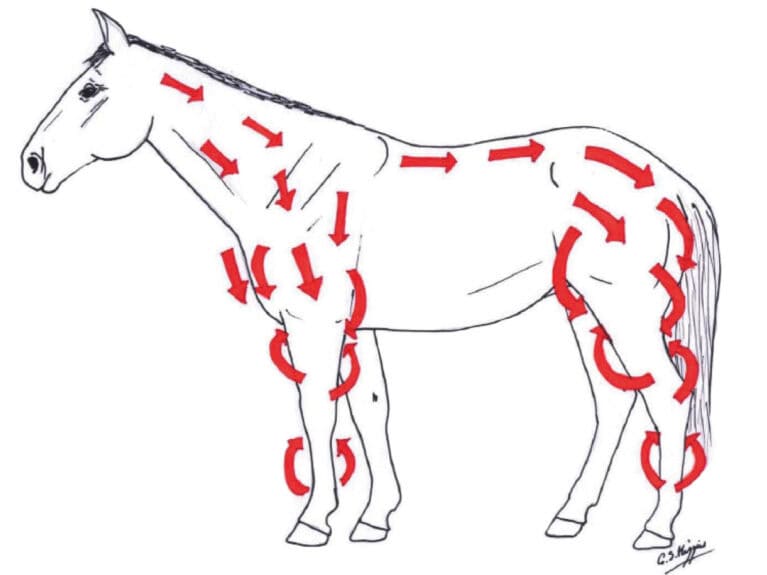
- Effleurage is a rhythmic, deep, stroking movement using both hands. Performed towards the heart, it aids lymphatic drainage and venous blood circulation, stimulates nerve endings, releases a natural pain-reducing opiate, relaxes contracted muscles and is psychologically soothing.
- Kneading involves the compression and release of muscle tissue. It’s usually performed with the hand but may also involve a clenched fist or the elbow, the choice being determined by the tissue being worked. This technique aims to mimic muscle contraction and it aids the venous circulation.
- Frictions are pressures applied to small areas by one finger, reinforced by another, in a forward circular motion. This technique helps to break down muscle knots, mobilise scar tissue by irritating the area to re-establish the natural healing of the body, reduce muscle tension in smaller muscular areas and increase localised circulation of blood and lymphatic drainage.
- Tapotement uses double-handed rapid percussion to stimulate underlying tissue. Performed by the sides of the hands on smaller muscle groups (hacking) or on larger groups using cupped palms (clapping), it is ideal pre-exercise to help warm up the muscle.

Try this at home
Massage is best performed by a professional therapist who will be able to assess your horse’s musculature and offer advice on a suitable programme going forwards. They will also be able to demonstrate techniques that you can use between treatments.
Nevertheless, as a horse owner, massage is a useful skill to learn and it can help you to maintain your horse’s suppleness, flexibility and comfort between visits from your professional therapist.
Did you know?
By getting into the daily routine of running your hands along your horse’s back and observing what it feels like and how your horse reacts to your touch, you’ll learn what’s normal for your horse, allowing you to then identify any changes.
Recognising reactions
Learning to accurately assess your horse’s reactions makes massage a more interactive process, thereby allowing you to select the right technique for your horse.
Positive reactions include…
- breathing – slower/deeper breaths
- licking and chewing
- yawning and stretching
- blinking
- facial expressions – relaxed nostrils, ears and mouth
Negative reactions include…
- putting ears back
- baring teeth
- biting
- lifting a leg
- kicking
- fidgeting
- facial expressions – wrinkles above the nostrils, tight lips and mouth
TOP TIP
As you massage, watch your horse and read his reactions. You can then alter the pressure or spot where you’re massaging depending on whether you see positive or negative feedback.
How to massage your horse
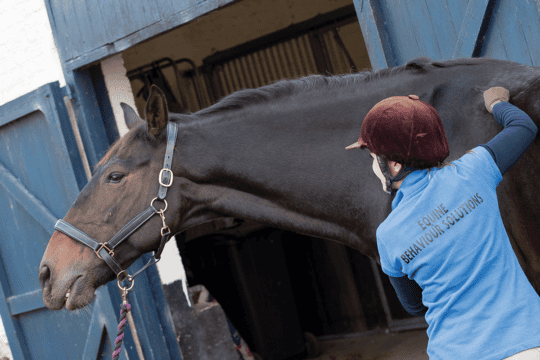
Effleurage can be very relaxing for your horse both mentally and physically. It’s the main ingredient in massage and can be used anywhere on his body. It warms up muscles before applying more specific techniques and is also used to link techniques together, as well as at the end of a session to help cleanse and relax the tissues. A whole massage can be done using only effleurage.
You can carry out effleurage yourself…
- Stand with your feet wide apart and your knees soft. Place your hand on the area of the body that you want to massage.
- Perform long, even strokes over the body in the direction of the hair, letting your hand mould to the shape of your horse.
- Use both hands along the neck, back and over the hindquarters. At the end of a stroke, leave one hand on your horse as you move your other hand back to start a new stroke. This ensures you have a continuous contact with your horse, which is important for massage.
- Let your body sway with the movement – the technique comes from your whole body, not only your arms.
- Apply a confident pressure, so your horse knows you’re there – too light can be ticklish and irritating, so it’s important to have the pressure that’s comfortable for him.
- Assess what suits your horse by experimenting with different pressures and listening to the feedback he gives you.
- Start with lighter and slower strokes and, as the muscles warm up, gradually increase the pressure.
- Get into a rhythm to help your horse relax, ensuring each stroke is a continuous motion.
- Having massaged one area, repeat this technique on another area of the body.
TOP TIP
Think of effleurage as a little like ironing – as it eases out any tensions within the muscles.
Practice makes perfect
Giving a massage can be quite physically tiring but the more often you do it, the stronger your own muscles and hands will become and the more adept you’ll be. And as that happens, your massage will, in turn, start to be more effective.
Practice makes perfect and, before long, when you start to see the results of your efforts, your daily massage session will not only be something you look forward to doing with your horse but also a source of great personal satisfaction.