


One four-fence exercise to rule them all? Susie Berry reckons so. Try it for yourself with her top tips
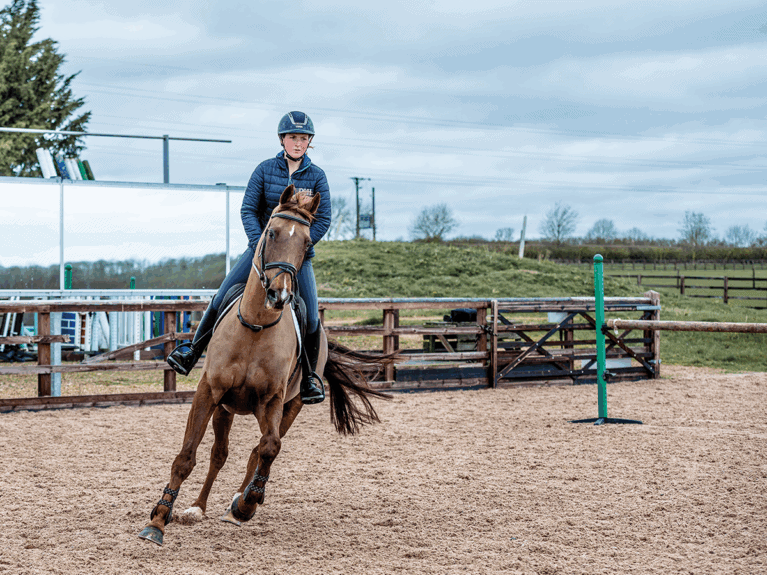
Our expert: Susie Berry has represented Ireland in the European and World Championships, and was in the Irish team at the 2024 Paris Olympics.
When you’re short on time and space, the last thing you want to be doing is resetting fences in your arena before you ride. That’s when all-in-one exercises come in handy, because you can leave them up all day – or for several days – and every horse and rider who tries them will benefit, whether they’re learning to put courses together or preparing for a five-star.
Setting up
You’ll need four sets of poles and wings, which you’ll use as small uprights on each quarter of a large circle. This exercise is all about rideability, so the size of the fences should be well within your comfort zone to allow you to focus your attention on how you ride between them. Once you’ve perfected it, you can then build them up for an additional challenge.
Step one
Before you even think about leaving the ground, your horse must have a basic level of manoeuvrability. The whole point of the exercises in this set-up is improving rideability, so we’re not looking for perfection from your warm-up, but you must be able to steer in each direction and your horse must move off your leg and come back easily when you ask him. So, use plenty of transitions in your warm-up, as well as changes of rein.
To start using the fences, pick up working trot and ride on a circle outside the jumps. Then, ride 15m circles to the inside around each individual jump. Repeat on the other rein.
Increase the challenge by beginning on a smaller circle inside the jumps and changing both the bend and your diagonal in order to ride 15m circles around each fence.
Once you’ve mastered that in trot on each rein, move into canter. This time, you’ll only ride the first version of the exercise, turning to the inside to circle each fence.
Make sure you sit tall and look where you’re going, as this will subtly shift your weight in the saddle and help guide your horse. A still and stable outside rein will stop your horse from falling in on the turns, while your outside leg pushes his body around your inside leg, which will sit firmly at the girth.
Top tip
If your horse is keen and lands cantering from a trot fence, that’s okay – use the smaller circle to get him back to trot, even if you need to ride it a few times.
Creating collection
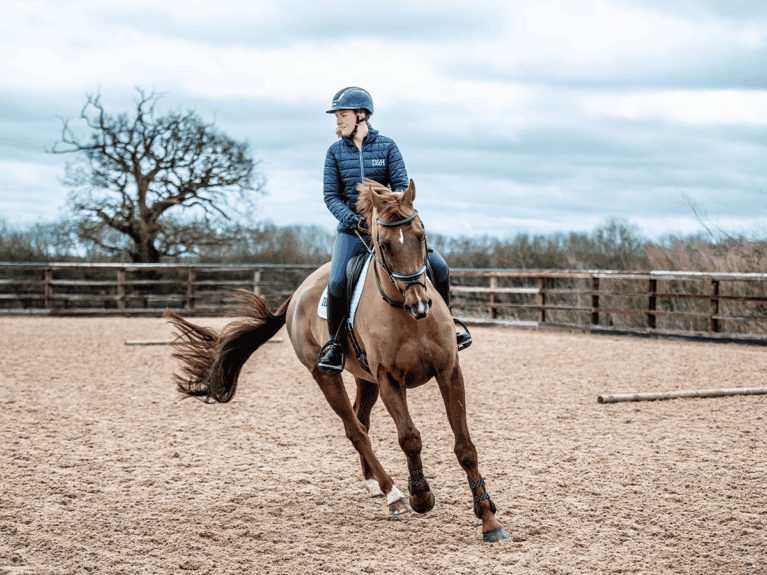
When riding small, balanced circles – especially when jumping is involved – you’ll need to have a shorter-strided canter that’s active, energetic and engaged.
To create this, first establish the energy. Canter around your school in a light seat to allow your horse to move forward freely, before sitting deeper and engaging your core to encourage him to shift his weight onto his back end. Your leg should still be encouraging him forward into your hand, but without any kicking or pulling.
Practise the transition between the two canters by moving back and forth between a contained, engaged core with a steady contact and a more open, active hip motion with a forward hand. The more you ride that transition, the clearer, cleaner and easier it’ll become. Ultimately, you want it to feel it’s coming from a change in your seat and core, rather than from your hand.
Step two
Continue working on small circles on the larger circle, but, this time, add the small uprights into the mix. Once again, begin in trot and pop one of the fences a couple of times on each rein before starting the exercise in full. Then, after landing, immediately ride a 10–15m circle to the inside before heading on to the next upright.
Continue around the circle, repeat on the other rein, then step up into a more collected canter and ride through the exercise again. This is a golden opportunity to practise using your eyes because, as you’re riding the circle, you should be looking over your shoulder to keep the centre of your next jump in sight.
Top tip
Don’t get too hung up on making the picture look pretty. This exercise is all about working on function, rather than form – sometimes, you’ll be a little deep or take off slightly far from your jump. That’s fine!
Step three
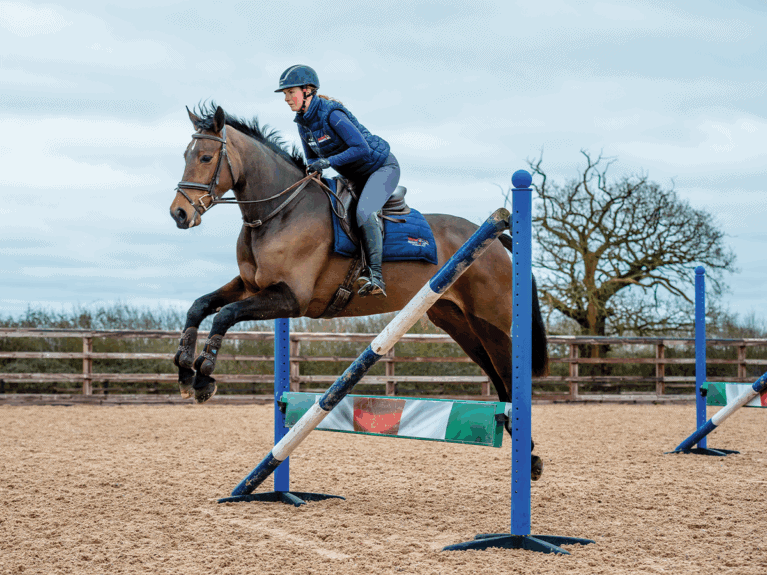
This time, remove the smaller circles and simply travel around the large circle in canter, popping over the central point of each jump as you go. That might sound easier than those small circles, but it’s a great test of your ability to maintain rhythm, balance and straightness, as the jumps will come up really fast.
As always, keep your eyes on where you’re heading, use your outside rein to stop your horse from falling in and, rather than worrying about the stride pattern, count out loud to establish what your horse is most comfortable with in the space you have. It’s a great way to learn about his natural stride length, something that will also help you when course walking at competitions.
At some point, your horse will probably start to rush, in which case add a small circle or transition to trot to regain his focus. There are several options to stop him anticipating – if you’re losing his shoulder to the inside, you could return to trot and ride a 10m circle to the outside, rather than the inside, or you could ride a square turn, instead of staying on the curve of the circle, to help work on his straightness.
To ride a square turn, land straight after the jump, keep your aids equal and central, sit tall and deep and use your outside aids to push your horse around your secure inside aids, using a tiny amount of outside flexion to keep him as straight as possible.
Step four
You’ve ridden the circle without worrying about stride patterns but, now, we’re going to bring them in. Every horse’s natural stride is different, which is why it’s so important to have ridden the exercise through without trying to adapt his step, because it means you’ll now know how many strides he’ll default to in this distance.
For my horse, it’s six strides, so, first, I’ll ride once around the circle fitting six strides into each quarter. Then, I’ll use my engaging aids to put him into a more collected canter, ride half a circle without jumping the fences to establish that new pace and then ride the circle of fences aiming to fit seven strides into each quarter. Finally, I’ll use half a circle to open up his stride and aim to jump around the circle with just five strides in each quarter.
Top tip
Ready for a serious challenge? See if you can ride around the circle changing your stride pattern in each quarter.
Maximum benefit
I often say I could leave this exercise in my arena for two weeks and work on something different every day, which means you don’t have to ride each step of the full exercise in one session. Instead, focus on adding parts of it to your schooling sessions and adapt it to your needs – it’s just as useful if you use poles on the ground instead of jumps, and that will make it suitable for less experienced horses or riders, too.
Either way, you’ll feel the immediate benefits the next time you jump a course of fences, because you’ll be in the habit of picking your lines in advance, looking for them early and instinctively adjusting your horse when needed.
Top tip
Young or inexperienced horses can find it harder to collect, so, instead, work on developing the transition between working canter and a more open stride.
Your Comments

Newsletter Sign-up


Subscribe
Latest Issue

Bubby Upton backs air ambulance appeal after life-threatening riding accident
Added 15th October, 2026
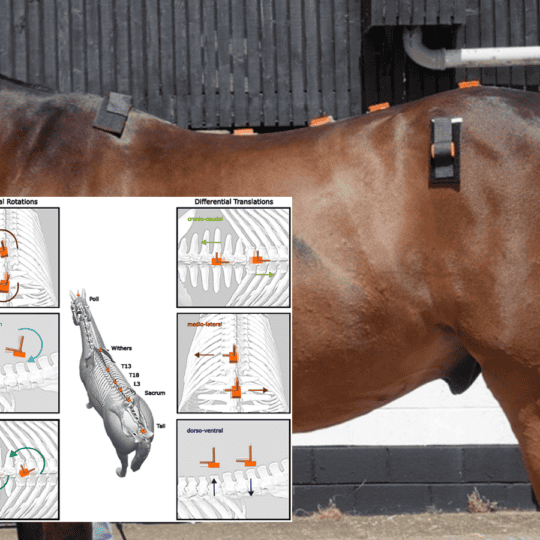
Load-pulling work linked to reduced spinal movement in military horses
Added 14th October, 2026




Step-by-step on how to hitch a trailer
Added 18th March, 2025

Winter Training: Part 2
Added 4th March, 2025