
News News
Most Read Articles
Military horses with a history of load-pulling generally show reduced movement through parts of their back compared with horses used only for ridden duties, a Royal Veterinary College (RVC) study has found. The research also highlights how surface conditions influence spinal movement, with implications for the assessment of equine back health.
The findings could help establish reference data for normal equine back movement, supporting veterinary professionals in identifying abnormalities, monitoring rehabilitation and assessing responses to treatment.
Study examines back movement in 107 horses
Researchers assessed 107 healthy military and police horses from The Kings’ Troop Royal Horse Artillery, the Defence Animal Training Regiment and The Horse Trust. The horses included those with current or previous load-pulling experience, such as ceremonial gun carriage work, alongside those used primarily for ridden military and police duties.
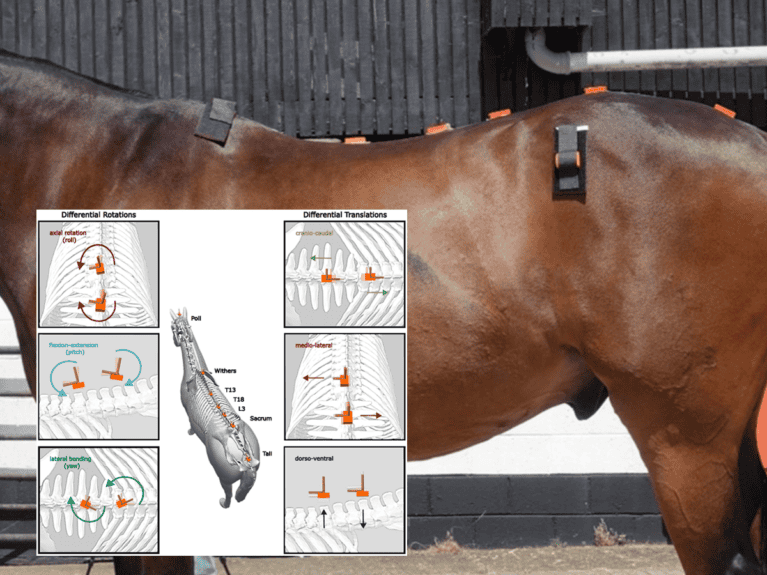
Back movement was recorded using EquiGait, a nine-sensor inertial measurement system. Horses were assessed walking and trotting in-hand over both hard and soft surfaces.
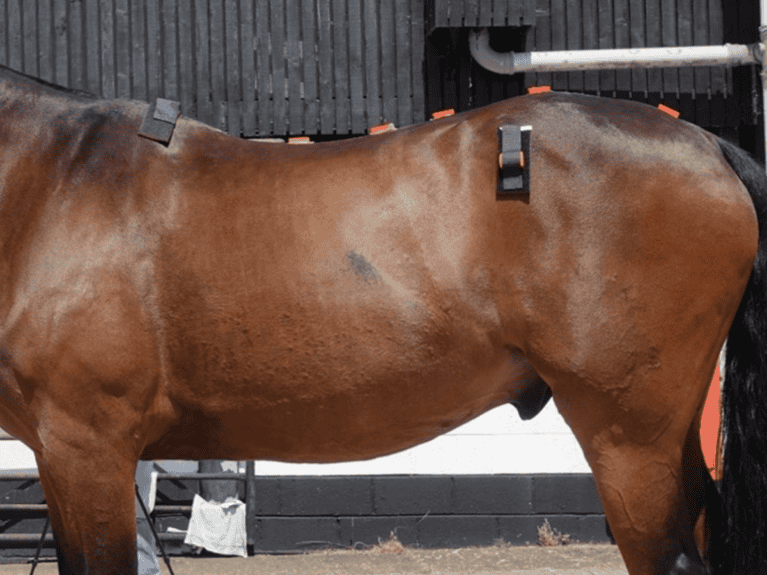
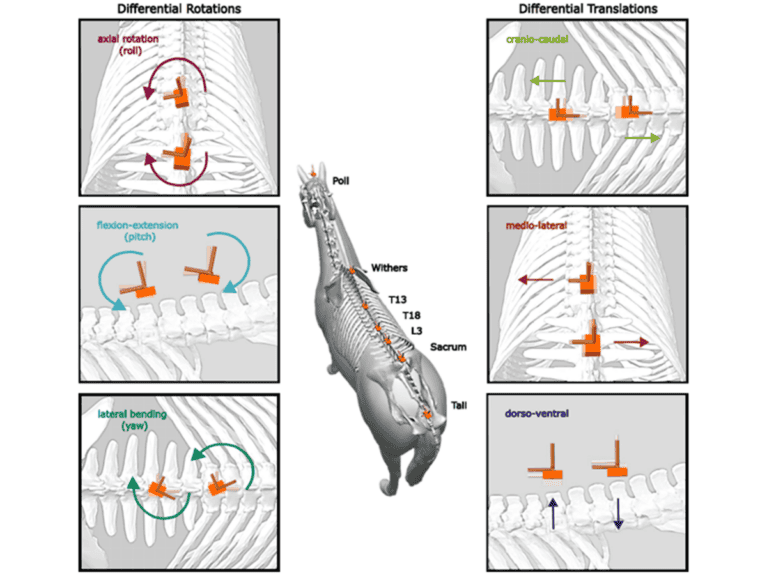
The technology measured different types of movement at multiple points along the spine, including forwards and backwards, sideways and vertical motion, as well as rotation, flexion, extension and lateral bending.
The results showed that horses with a history of load-pulling generally had reduced movement across several regions of the thoracolumbar spine, which extends through the back.
Surface conditions also affect spinal movement
The type of surface had a considerable influence on the horses’ movement. Across much of the back, the horses generally showed a greater range of movement on soft surfaces than on hard ground.
This variation is an important consideration when assessing horses for potential back problems. Without taking footing into account, normal differences in movement could be mistaken for signs of pain, injury or dysfunction.
Back pain is a recognised health and welfare concern in horses, but subtle changes in spinal movement can be difficult to identify through visual assessment alone. While wearable technology has advanced objective lameness assessment, researchers say there is still limited information about normal equine back movement and the factors that affect it.
Dr Kate Horan, a post-doctoral researcher at the RVC when leading the study, said: “By establishing how healthy horses move under different conditions, we are building the reference data needed to recognise when back movement falls outside normal expectations. Understanding how factors such as discipline and surface conditions influence back movement is essential for accurately interpreting objective assessments. Ultimately, the practical methods used in this research could improve how equine back problems are identified, monitored and managed.”
Further research needed into long-term effects
The differences identified between horses used for different types of work suggest that discipline may influence how the back moves. However, further research is needed to establish whether these adaptations have any effect on long-term health, performance or susceptibility to injury.
Dr Dagmar Berner, senior lecturer in equine diagnostic imaging at the RVC and principal investigator on the study, said: “One of the most interesting findings was that horses from different disciplines don’t all move in the same way. Their back movement appears to reflect the type of work they do. We also saw that the surface matters, which is an important consideration when assessing horses clinically. We’re excited to expand this work by looking at more breeds, helping us better define what ‘normal’ back movement really is.”
The researchers plan to expand the dataset to include more breeds, helping to build a clearer picture of normal back movement across different horses.
The research was funded by The Horse Trust and led by Dr Horan and a team at the RVC, with collaborators from The Kings’ Troop Royal Horse Artillery and the Defence Animal Training Regiment.